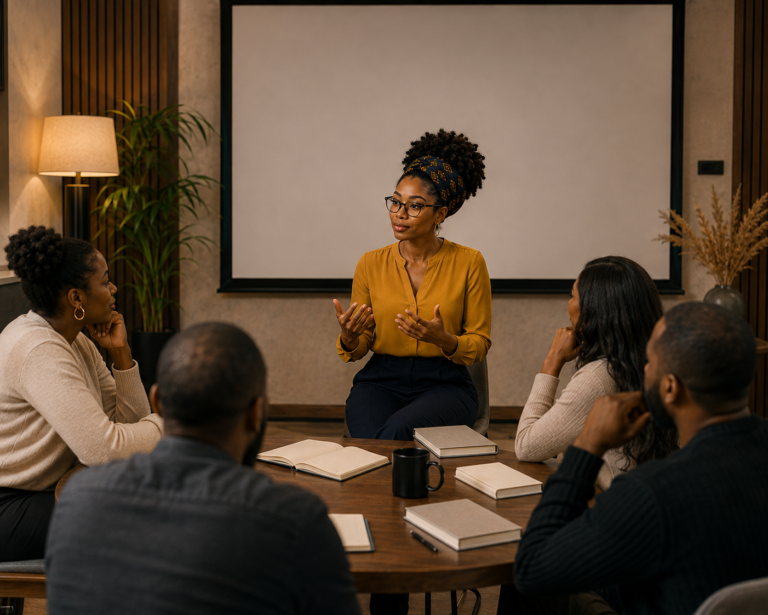
Brief 003: The Different Types of Education

Formal, informal and non-formal education.
THE BIG IDEA
When we hear the word education, most of us immediately picture a classroom. A teacher at the front, students sitting at desks, books, assignments, examinations, grades, and eventually, perhaps, a certificate or degree. That is formal education.
This is only one form of education.
A child learning how to cook by watching a parent is learning.
An apprentice learning a trade from an experienced craftsperson is learning.
A professional attending a weekend workshop is learning.
A person teaching themselves graphic design through books, videos and practice is learning.
A community passing knowledge from one generation to another is engaging in education.
These experiences may look completely different from university. Yet they can all contribute to the development of knowledge, skills, understanding and capability.
This is why it is useful to distinguish between three broad forms:
Formal education.
Non-formal education.
Informal education.
They overlap, they can happen at the same time, and one person’s educational journey can contain all three.
The important thing is not to decide which one is “the real education.”
The better question is: What kind of learning does each form make possible?
THE SIMPLE EXPLANATION
Think about education as having three different levels of structure.
Formal Education
Highly structured education delivered through recognised institutions.
Think:
school → university → qualification
Non-Formal Education
Organised learning that happens outside the traditional formal education system.
Think:
course → workshop → training → community programme
Informal Education
Learning that happens naturally through everyday life, relationships, experience and observation.
Think:
life → experience → observation → practice
The boundaries are not always perfectly rigid.
A workplace training programme might look quite structured but still be non-formal.
An apprenticeship might contain organised instruction while also relying heavily on informal learning through observation and practice.
A person might attend a university while independently learning other things through conversations, books and experience.
Education is therefore better understood as a spectrum of pathways rather than three completely separate boxes.
1. FORMAL EDUCATION
Formal education is the type most people are familiar with.
It is usually:
- structured;
- intentional;
- organised by an institution;
- guided by a curriculum or defined programme;
- delivered over a particular period;
- assessed in some way; and
- often connected to recognised qualifications.
Examples include:
Primary school
Secondary school
College
University
Professional programmes
Recognised vocational institutions
A formal educational pathway might look something like:
Primary education → secondary education → university → professional qualification
There is usually a defined progression. You complete one stage and move towards another.
WHAT MAKES FORMAL EDUCATION “FORMAL”?
It is not simply the fact that there is a classroom. The important feature is the structure.
There is usually an institution.
There is a defined programme.
There are learning objectives.
There may be teachers or instructors.
There may be examinations or assessments.
There may be entry requirements.
There may be a defined duration.
And there may be a recognised credential at the end.
This structure can be extremely valuable. It gives learners a pathway.
Instead of having to figure everything out themselves, someone has already organised a sequence of subjects, skills and experiences. That can make complex fields much easier to navigate.
Imagine trying to teach yourself medicine from scratch.
Or architecture.
Or engineering.
Or law.
You could certainly begin learning independently. But a structured educational system can provide something incredibly useful: a map.
THE STRENGTHS OF FORMAL EDUCATION
Formal education can provide:
Structure
You know what you are expected to learn and roughly when.
Expert Guidance
Teachers and lecturers can provide knowledge, context and feedback.
Progression
Programmes can take you from foundational concepts towards more advanced ones.
Assessment
Tests, assignments and practical assessments can provide evidence of development.
Community
You learn alongside other people.
Credentials
Successful completion can lead to qualifications that are recognised by institutions and employers.
Access
Certain professions and opportunities may require particular formal qualifications.
Formal education therefore remains extremely important.
The point is not to diminish it. The point is to recognise that formal education is one pathway within a much larger educational landscape.
THE LIMITATIONS OF FORMAL EDUCATION
Formal education also has limitations.
A system designed to educate large numbers of people inevitably has to create structure, and structure can sometimes become rigid.
A curriculum may not reflect everything happening in the real world.
A student may understand a subject differently from the way it is taught.
An examination may measure only some forms of competence.
A qualification may demonstrate completion without demonstrating mastery of every practical skill.
And access can be unequal. Cost, location, admission requirements, family circumstances and other barriers can affect who gets to participate.
This does not mean formal education is ineffective. It means we should not confuse: the system designed to facilitate education with the entirety of education itself.
2. NON-FORMAL EDUCATION
Now we move into the middle ground.
Non-formal education is organised and intentional learning that takes place outside the traditional formal education system.
This is where many people become confused.
If it is organised, isn’t it formal?
Not necessarily.
The distinction is often about the institutional structure and purpose.
A weekend business workshop can be organised.
A coding bootcamp can be organised.
A community literacy programme can be organised.
A professional development seminar can be organised.
A short photography course can be organised.
But these experiences may not be part of the traditional school-to-university pathway. They can therefore fall into the category of non-formal education.
EXAMPLES OF NON-FORMAL EDUCATION
Think about:
- professional workshops;
- community education programmes;
- adult education classes;
- short courses;
- continuing professional development;
- skills training;
- leadership programmes;
- entrepreneurship programmes;
- community workshops;
- language classes;
- digital skills programmes;
- career training;
- financial literacy programmes;
- some online courses;
- youth development programmes; and
- organised vocational training outside traditional institutions.
The defining feature is that learning is still deliberately organised.
Someone has decided:
“We want people to develop this particular knowledge or skill.”
A programme is created, resources are provided, someone teaches or facilitates, participants engage and learning takes place. But the programme does not necessarily require the full structure of formal education.
WHY NON-FORMAL EDUCATION MATTERS
Non-formal education can be especially valuable when people need to learn something specific, practical or timely.
Imagine a new technology suddenly becoming important in your industry.
Do you really need to enroll in a four-year degree?
Probably not.
You may need a six-week training programme.
Or a professional workshop.
Or an intensive course.
Or a practical bootcamp.
This is one of the great strengths of non-formal education:
flexibility.
It can respond more quickly to changing needs.
A formal institution may take years to redesign a programme. A short training programme can sometimes be created much faster.
FORMAL VS NON-FORMAL
Imagine two people who want to learn digital marketing.
Person A enrolls in a university programme lasting several years.
Person B attends a six-week digital marketing training programme.
Both can be engaging in intentional education. But the structure, duration, context and credential may be very different. Neither is automatically better, they simply serve different purposes.
The first may provide broader academic foundations. The second may focus heavily on immediate practical application. The right choice depends on the learner’s objective.
This is an important principle:
The best educational pathway depends partly on what you are trying to accomplish.
3. INFORMAL EDUCATION
Now we arrive at the form of education that is easiest to overlook.
Informal education happens through everyday life.
There may be no classroom, no curriculum, no admission process and no certificate. Sometimes there is not even a conscious decision to “study.” You simply encounter something.
You observe.
You participate.
You imitate.
You ask questions.
You experiment.
You make mistakes.
You receive feedback.
You adapt.
And you learn.
INFORMAL EDUCATION IS EVERYWHERE
Consider how much people learn outside classrooms.
A child learns social behaviour from family.
A young person learns how to cook by watching someone.
Someone learns how to negotiate by observing experienced people.
An employee learns workplace culture by paying attention.
An entrepreneur learns from customers.
A person learns financial habits from their family.
A traveller learns about another culture through direct experience.
A person learns patience through life.
Someone learns what not to do by making an expensive mistake.
Someone learns how to repair something by watching another person do it.
Someone learns a new word during a conversation.
Someone learns how people behave under pressure by observing them.
None of these necessarily looks like “education.” But learning is happening.
THE ROLE OF FAMILY
The family is one of the earliest educational environments most people experience. Long before a child enters school, they are already learning.
How do people communicate?
How do we behave towards others?
What happens when we make a mistake?
How do we prepare food?
How do we greet people?
How do we solve disagreements?
How do we treat money?
How do we respond to difficulty?
What do we value?
Much of this knowledge is transmitted without a formal lesson.
A parent may never sit down and announce:
“Today we are studying household responsibility.”
The child watches, participates, copies, experiences consequences, and gradually develops an understanding.
That is informal education.
THE ROLE OF CULTURE
Informal education is also one of the ways culture survives.
Every society contains knowledge that is passed from one generation to another.
Stories.
Traditions.
Crafts.
Language.
Food.
Music.
Customs.
Social expectations.
Practical knowledge.
Ways of solving problems.
Ways of relating to community.
Much of this knowledge is not learned through textbooks. It is learned by participation.
You grow up around it.
You observe it.
You practise it.
You absorb it.
You question some of it.
You preserve some of it.
You change some of it.
This makes informal education a powerful mechanism through which societies transmit knowledge.
THE ROLE OF EXPERIENCE
Experience is another major source of informal education.
Consider someone starting their first business.
They may read books.
They may attend courses.
They may find a mentor.
But there are things they will only truly understand after encountering real customers, real problems, real money and real consequences.
Experience teaches things that theory sometimes cannot fully communicate.
But remember the lesson from Brief 002:
Experience alone does not guarantee learning.
You have to reflect.
You have to pay attention.
You have to identify patterns.
You have to ask questions.
Otherwise, you can repeat the same experience without becoming significantly wiser.
Informal education becomes powerful when experience is converted into understanding.
THE THREE FORMS TOGETHER
The most interesting thing is that people rarely use only one form of education.
Imagine someone learning how to become a chef.
They might attend culinary school.
Formal education.
They might attend a specialised pastry workshop.
Non-formal education.
They might spend years cooking alongside an experienced chef and learning through observation.
Informal education.
Then they experiment at home, learn from mistakes, watch cooking videos, ask other chefs questions, read recipes and develop their own techniques.
Their education becomes a combination of all three. This is how many real educational journeys actually work.
A SIMPLE EXAMPLE
Imagine you want to learn photography.
Formal
You enrol in a university photography programme. You study theory, composition, history and technical skills.
Non-Formal
You attend a three-day photography workshop with an experienced photographer. You learn portrait lighting.
Informal
You spend the next year taking photographs. You experiment, you make mistakes, you observe other photographers, you analyse your own work, you learn what works and you develop your own style.
Which one educated you?
All three.
But they contributed differently.
THE EDUCATIONAL SPECTRUM
Rather than imagining education as three isolated boxes, imagine a spectrum.
At one end:
Highly structured institutional education.
Then:
Organised learning outside traditional institutions.
Then:
Everyday experiential learning.
Formal.
↓
Non-formal.
↓
Informal.
The boundaries can overlap and that is okay.
Real life is messy.
A workplace can contain formal training and informal learning.
An apprenticeship can combine organised instruction with observation.
An online course can be highly structured but still sit outside traditional formal institutions.
The purpose of these categories is not to force every experience into a perfect box. It is to help us see the different ways education happens.
WHAT ABOUT SELF-DIRECTED LEARNING?
Self-directed learning deserves special attention.
You decide what you want to learn, you choose the resources, you determine your pace, you practise, you assess your progress, you seek feedback and you adjust your approach.
This can overlap with both non-formal and informal education.
For example: You might teach yourself coding through an organised online course.
That contains a structured educational resource. But you decide what to study, how quickly to progress and how much additional practice to do.
Or you might teach yourself entirely through books, experiments and projects.
The important thing is that self-directed learning is about who takes responsibility for the learning process.
It does not necessarily describe one specific type of education.
WHAT ABOUT ONLINE EDUCATION?
Online education complicates the categories even further.
An online university degree can be formal education.
An online professional certification programme can be non-formal education.
Watching a YouTube tutorial and experimenting afterwards can be informal learning.
Same technology, different educational structure. This is why we should not classify education simply by asking: “Is it online?”
The better questions are:
Who organised it?
How structured is it?
What is its purpose?
Is there a defined curriculum?
Is it part of a recognised institution?
Is there assessment or certification?
How much responsibility does the learner have?
These questions tell us much more.
THE NIGERIAN ANGLE
This distinction is particularly important in Nigeria because educational life has never existed entirely inside classrooms.
Consider apprenticeship.
A young person may learn a trade by spending years alongside someone with practical expertise. They observe, they assist, they practise, they make mistakes and they gradually take on more responsibility. Eventually, they may become capable of doing the work independently.
This educational pathway may not resemble university. But that does not make it “not education.” It is a different educational structure.
Nigeria also has enormous amounts of knowledge transmitted through families, communities, workplaces, religious communities, professional networks, markets and informal economies.
The challenge is that society can sometimes place such overwhelming emphasis on certificates that other forms of competence become undervalued.
We should be careful about this. A degree and an apprenticeship are not necessarily substitutes. They can serve different purposes, but neither should automatically be treated as the only legitimate evidence that someone has learned something.
THE AFRICAN ANGLE
Across Africa, the relationship between formal, non-formal and informal education is particularly important.
Formal institutions provide foundational and advanced academic education.
Non-formal programmes can expand access to vocational, entrepreneurial, professional and community-based learning.
Informal systems can preserve practical knowledge, cultural traditions, crafts and skills passed between generations.
This creates an enormous educational ecosystem. The opportunity is to strengthen the connections between these systems rather than treating them as competitors.
Imagine a young person who can:
- receive formal academic education;
- learn practical skills through apprenticeship;
- develop digital skills through online courses;
- learn entrepreneurship through experience;
- find mentors;
- participate in community programmes;
- and continuously teach themselves.
That is not a weaker education. It can be a broader one.
THE PROBLEM WITH “WHICH ONE IS BEST?”
We often ask:
Is university better than apprenticeship?
Is a degree better than a short course?
Is formal education better than informal learning?
These questions can be misleading.
Better for what?
That is the question.
If you want to become a doctor, formal education and professional training are essential.
If you want to learn how to use a specific software programme, a short practical course may be more efficient.
If you want to learn a family recipe, you may not need a university module.
If you want to develop entrepreneurial judgement, practical experience may teach you things a textbook cannot.
Different goals require different educational pathways.
So instead of asking:
“Which form of education is best?”
Ask:
“Which form of education is most appropriate for this goal?”
EDUCATION IS AN ECOSYSTEM
Perhaps the biggest idea in this Brief is this:
Education works best when we stop imagining it as a single institution.
Think of your education as an ecosystem.
Your school may be part of it.
Your university may be part of it.
Your workplace may be part of it.
Your family may be part of it.
Your mentors may be part of it.
Your books may be part of it.
Your community may be part of it.
Your mistakes may be part of it.
The internet may be part of it.
Your experiences may be part of it.
And you are not simply a passive recipient, you are also a participant.
You choose what to pursue.
You decide what to question.
You determine what to practise.
You decide which lessons to carry forward.
You can even become an educator for someone else.
THE HIDDEN EDUCATION AROUND YOU
Take a moment and look at your own life.
How much have you learned outside school?
Maybe someone taught you how to cook.
Someone taught you how to negotiate.
Someone showed you how to fix something.
A colleague taught you a shortcut.
A friend introduced you to a book.
A mistake taught you patience.
A difficult experience taught you boundaries.
A mentor changed how you think.
A customer taught you what people actually want.
A failure taught you what preparation was missing.
A child taught you something you never expected to learn.
None of these experiences necessarily came with a certificate, yet they may have changed you permanently. That is the invisible education happening around us every day.
WHY RECOGNISING INFORMAL LEARNING MATTERS
When people only recognise formal education, they can overlook enormous amounts of human capability.
Someone may say:
“I don’t have qualifications.”
But perhaps that person has spent ten years building things.
Or caring for children.
Or running a business.
Or repairing machines.
Or managing people.
Or creating art.
Or cooking professionally.
Or navigating complex environments.
Or solving practical problems.
The absence of a credential does not automatically mean the absence of knowledge or skill.
At the same time, we should not make the opposite mistake. Informal experience does not automatically equal expertise either.
The real question remains:
What has the person actually learned, and what can they demonstrate?
THE CREDENTIAL QUESTION
Formal education often produces credentials. Non-formal education may also produce certificates or badges. Informal learning often produces no official documentation at all.
This creates an interesting problem.
How do we demonstrate what someone knows when there is no certificate?
Sometimes through:
- portfolios;
- demonstrations;
- practical tests;
- work samples;
- references;
- experience;
- projects;
- interviews;
- apprenticeships;
- competitions; and
- observable performance.
The future of education may therefore require us to become better at recognising competence, not simply credentials.
A certificate can be useful, but competence is what allows someone to actually do the work.
A BETTER WAY TO THINK ABOUT YOUR EDUCATION
Instead of asking:
“Where did I get my education?”
Try asking:
“Where does my education come from?”
Maybe your answer looks like this:
School
Academic foundations.
Books
Ideas and perspectives.
Mentors
Experience and guidance.
Work
Practical knowledge.
Failure
Reflection and resilience.
Courses
Specialised skills.
Community
Culture and social knowledge.
Travel
Perspective.
Practice
Competence.
Curiosity
Continuous learning.
Suddenly, your education looks much larger than your CV.
THE LEARN BRIEFLY FRAMEWORK
When thinking about any educational opportunity, ask five questions:
1. WHAT DO I NEED TO LEARN?
Define the knowledge, skill or capability.
2. WHY DO I NEED TO LEARN IT?
Connect learning to a meaningful goal.
3. WHICH PATHWAY FITS?
Formal?
Non-formal?
Informal?
Or a combination?
4. HOW WILL I KNOW I HAVE LEARNED IT?
Use evidence.
Can you explain it?
Can you demonstrate it?
Can you apply it?
Can you teach it?
5. WHAT COMES NEXT?
Learning should create the foundation for further development.
This prevents education from becoming simply a collection of courses and certificates. Instead, it becomes a deliberate journey towards greater capability.
SO, WHAT ARE THE THREE TYPES?
Let’s make it simple.
FORMAL EDUCATION
Structured + institutional + recognised pathway
Examples:
School, university, recognised professional education.
NON-FORMAL EDUCATION
Structured + intentional + outside the traditional formal system
Examples:
Workshops, short courses, training programmes, community programmes, professional development.
INFORMAL EDUCATION
Everyday + experiential + often unstructured
Examples:
Family, work experience, observation, conversation, culture, practice and life experiences.
And remember:
These categories can overlap.
A person’s education does not have to belong to only one. In fact, the richest educational journeys often combine all three.
THE BIGGER IDEA
Education is not a building.
It is not a certificate.
It is not a timetable.
It is not a particular age.
It is not even necessarily an institution.
Education is a collection of pathways through which human beings develop.
Some pathways are carefully designed.
Some are organised by institutions.
Some are created by communities.
Some are created by individuals.
And some simply emerge from living.
The classroom is one educational environment.
The world is another.
THE LEARN BRIEFLY TAKEAWAY
Formal education gives us structure.
Non-formal education gives us flexibility.
Informal education gives us experience.
And our lives often require all three.
You may need a degree.
You may need a short course.
You may need an apprenticeship.
You may need a mentor.
You may need a book.
You may need practice.
You may simply need to pay closer attention to what life is already teaching you.
The smartest educational journey may therefore not be:
school → degree → finish.
It may be:
learn → practise → experience → reflect → adapt → learn again.
Your education is bigger than the institutions you attended.
It includes the people who taught you.
The experiences that changed you.
The skills you developed.
The mistakes you understood.
The questions you asked.
And the things you deliberately chose to learn.
TRY THIS
Take five minutes and draw three columns on a piece of paper.
FORMAL
Write down the things you have learned through schools, universities or recognised educational institutions.
NON-FORMAL
Write down the courses, workshops, training programmes, seminars or organised learning experiences you have participated in.
INFORMAL
Write down the important things you have learned through family, work, relationships, observation, experience, mistakes, conversations and everyday life.
Then look at the three columns. You may be surprised by how much education you have actually received.
Now ask:
Which form taught me the most useful thing I know?
And:
Which form of education do I need more of right now?
LOLA ASKS
What if some of the most important things you know were never taught in a classroom?
Think about it, then ask yourself:
Where is my education actually coming from?
GO DEEPER
Now that we understand the different pathways through which education can happen, another question naturally follows:
How do we know whether education is actually working?
Because attending school is not the same as learning.
Completing a course is not the same as mastering a skill.
And receiving a certificate is not the same as becoming capable.
So what should we actually measure?
Knowledge?
Skills?
Understanding?
Competence?
Grades?
Credentials?
Or something else?
Coming through the Learn Briefly Guides collection:
What Does It Mean to Be Educated?
A deeper exploration of education, knowledge, competence, credentials and the question of what it really means for someone to be “educated.”
Want the concise version?
Watch here: https://youtube.com/shorts/V7zpjGnDoVA?feature=share
Read the next Brief here: Brief 004: Does education really work like a ladder?